 Skip to content

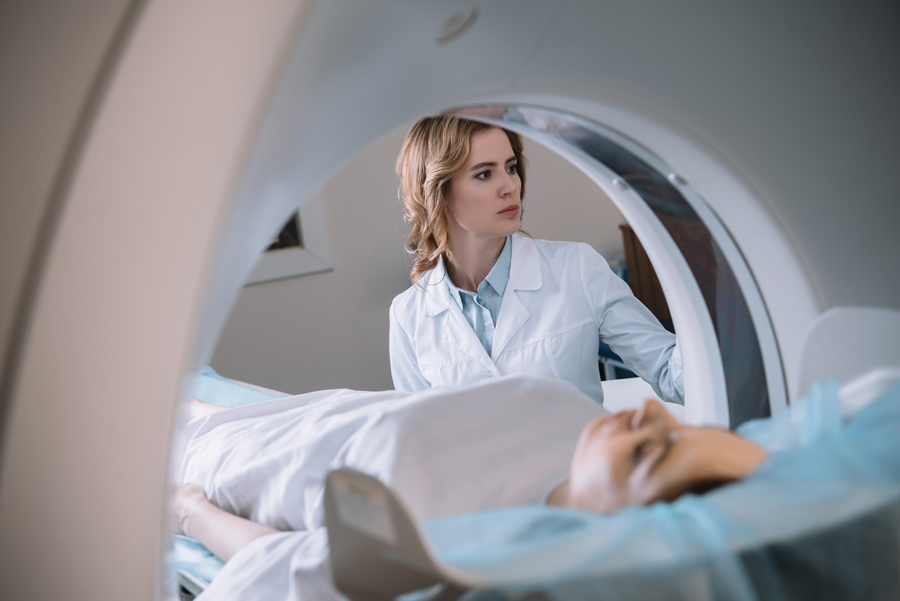
One of MRI’s strengths is its ability to create detailed images of many organs and soft tissues. Depending on the protocol, a full-body scan can identify abnormalities in several areas of the body, including:
- Suspicious masses or tumors in certain organs
- Cysts and other benign growths
- Some liver, kidney, and pancreatic abnormalities
- Certain brain and spinal findings
- Changes involving muscles and soft tissues
- Selected vascular abnormalities
That does not mean every finding represents a serious health problem. Whole-body imaging frequently identifies abnormalities that are benign or unlikely to affect a person’s health. Sometimes the first scan cannot determine exactly what a finding represents, so a more focused scan or another type of evaluation is recommended.
A normal full-body MRI also cannot rule out every disease. Some conditions are difficult to see on MRI, while others require a dedicated imaging protocol, laboratory test, biopsy, or different screening method.
What Is a Prenuvo Full Body MRI?
Prenuvo is one of the better-known companies offering elective whole-body MRI screening. Its whole-body examination uses a multiparametric MRI protocol to evaluate numerous organs and tissues during a single appointment.
Prenuvo states that its whole-body scan covers from the head to the ankles and generally takes about an hour. Its screening protocol does not use ionizing radiation or intravenous contrast. The images are reviewed by radiologists, and findings that need additional evaluation can lead to recommendations for further imaging or medical follow-up.
The appeal is easy to understand. Someone who feels well can undergo a broad examination without radiation exposure and potentially discover an unexpected abnormality. However, Prenuvo and other whole-body MRI services still have the same fundamental limitations of screening MRI. They cannot detect every medical problem and should not replace established screening tests or targeted imaging when there is a specific clinical concern.

How Does a Full Body MRI Scan Work?
Before entering the MRI room, you will be screened for implanted medical devices, metal fragments, and other factors that could affect MRI safety. You then lie on a table that moves into the scanner while different image sequences are collected from multiple areas of the body.
MRI scanners make loud knocking and tapping noises, so hearing protection is typically provided. You will also need to remain still for much of the examination because movement can reduce image quality. Some people find the enclosed space uncomfortable, particularly if they experience claustrophobia.
The length of the scan depends on the provider and the protocol being used. Many whole-body examinations take around 45 to 60 minutes, while Prenuvo reports that its standard whole-body screening scan takes approximately an hour.
After conducting the exam, the results are analyzed by the radiologist, who creates the report. Unidentified results may require additional procedures such as dedicated MRI, CT, ultrasounds, lab work, or consults with specialists.
What Are the Benefits of a Full Body MRI Scan?
A major advantage of MRI is that it can provide detailed images of many soft tissues without using ionizing radiation. For some patients, that makes it appealing as part of a broader preventive health strategy.
Potential benefits include:
- No ionizing radiation
- Detailed soft-tissue imaging
- Evaluation of multiple body regions during one appointment
- No IV contrast with many screening protocols, including Prenuvo
- The possibility of identifying certain abnormalities before symptoms appear
- A broader look at several organ systems at once
For healthy people undergoing elective screening, the overall benefit is still less certain. Finding an abnormality early can be valuable when it leads to meaningful treatment, but detecting more findings does not automatically mean better long-term health outcomes.
That difference is one of the reasons whole-body MRI screening remains an evolving area of preventive medicine.
What Are the Limitations of Full Body MRI?
A full-body MRI provides a large amount of information, but it is not a universal screening test.
Some diseases are better evaluated with other technologies. A general whole-body MRI does not replace mammography for breast cancer screening, colonoscopy or other recommended colorectal cancer screening, or appropriate cervical and prostate cancer screening. Patients still need to follow screening recommendations based on their age, medical history, and individual risk.
The same applies to cardiovascular disease. A full-body MRI is not designed to provide the detailed assessment of coronary plaque that can come from coronary artery calcium scoring or coronary CT angiography. If coronary artery disease is the main concern, a targeted cardiovascular evaluation can provide more useful information.
Whole-body MRI can also identify incidental findings. These are unexpected abnormalities discovered while looking for something else. Many are harmless, but it is not always possible to know that immediately. Additional scans, specialist consultations, or procedures can sometimes be needed before the finding can be classified.
The American College of Radiology currently states that there is not enough evidence to recommend total-body MRI screening for people without symptoms, risk factors, or a family history suggesting underlying disease. The organization also notes concerns about unnecessary follow-up testing and expense resulting from nonspecific findings.

Does a Full Body MRI Replace Other Screening Tests?
No. A whole-body MRI should not be viewed as a replacement for established preventive screening.
Different tests are designed to detect different conditions. Mammography remains an important tool for breast cancer screening. Colonoscopy and stool-based testing play specific roles in colorectal cancer screening. Cardiovascular testing such as a calcium score or CCTA can answer questions that a general whole-body MRI cannot.
A full-body scan may provide additional information, but it does not make these targeted tests unnecessary.
This is why physician interpretation matters. Preventive screening works best when each test has a specific purpose based on the person’s age, medical history, family history, symptoms, and risk factors.
Full Body MRI vs. Full Body CT Scan
MRI and CT both create detailed images of the body, but they do so in very different ways.
MRI uses magnetic fields and radio waves and does not expose the patient to ionizing radiation. It provides excellent detail for many soft tissues, including the brain, liver, kidneys, muscles, and other internal structures.
CT uses X-rays and tends to be much faster. It is particularly useful for evaluating the lungs, bones, certain blood vessels, and many acute medical problems. CT can also be combined with contrast to obtain highly detailed images of structures such as the coronary arteries.
One scan is not automatically better than the other. The appropriate choice depends on the medical question. Someone concerned about coronary artery plaque, for example, may benefit more from a cardiac CT study than from a general whole-body MRI.
Is a Full Body MRI Scan Safe?
MRI does not use ionizing radiation, which is one of its main advantages. For most people who do not have an MRI-related contraindication, the examination itself is generally well tolerated.
Safety screening is still important because of the powerful magnetic field. Certain pacemakers, implanted devices, metal fragments, or other medical hardware can affect whether MRI can be performed safely. Many newer implants are MRI-compatible or MRI-conditional, but they still need to be reviewed before the scan.
Claustrophobia can also be an issue for some patients, especially during a longer examination. Remaining still inside the scanner for an extended period can be uncomfortable as well.
With elective whole-body screening, the larger medical question often involves what happens after the scan. A finding that requires additional evaluation can lead to more imaging, procedures, expense, or anxiety. Those possibilities should be part of the decision before undergoing screening.
Who Should Consider a Full Body MRI?
There is no recommendation that every healthy adult should routinely undergo a full-body MRI.
Certain people at high risk for specific diseases may undergo whole-body MRI as part of an established medical surveillance program. Outside of those situations, the decision becomes more individualized.
Someone considering elective screening should think about what they hope to learn from the scan, whether they have particular risk factors or family history, and how they would handle an incidental finding that requires further investigation. It is also important to consider whether more focused screening could answer the same question more effectively.
For some patients, a full-body MRI may be a reasonable addition to a larger preventive health strategy. For others, targeted testing based on known risks may be more useful.
How Does Prenuvo Fit Into Preventive Care?
Prenuvo has made whole-body MRI screening more accessible to people who want to take a proactive approach to their health. Its ability to examine numerous regions without radiation or contrast is appealing, particularly for patients interested in advanced preventive testing.
However, the benefit of the screening is determined by how the findings are used. The report may include information ranging from benign anatomical changes to issues requiring prompt follow-up action.
That is why a Prenuvo scan should not exist separately from the rest of your medical care. Results should be considered alongside your history, symptoms, laboratory testing, family risk, and existing screening recommendations.
An MRI finding can be important, but it is only one part of the larger health picture.
How Full Body MRI Fits Into Preventive Medicine
Preventive medicine is not simply about performing as many tests as possible. It involves identifying the health risks that matter for a particular person and choosing the tools that can provide useful information about those risks.
For example, someone with a strong family history of coronary artery disease may need a detailed cardiovascular risk evaluation. Another patient with a significant family history of cancer could benefit from genetic counseling and targeted cancer screening. Someone with abnormal metabolic markers may need closer evaluation of blood sugar, cholesterol, body composition, and other factors.
Whole-body MRI can sometimes add another layer of information, but it should be considered in this broader context.
At Impact Health NY, Dr. Marcus evaluates preventive imaging alongside medical history, laboratory findings, cardiovascular risk, metabolic health, genetics when relevant, and other individual factors. This helps determine whether broad imaging, focused testing, or another type of evaluation is more appropriate.
Considering a Full Body MRI Scan?
A full-body MRI can provide a detailed look at many areas of the body without exposing you to ionizing radiation. Services such as Prenuvo have made this technology increasingly accessible, but the scan still has important limitations and does not replace recommended cancer screening, cardiovascular testing, or other targeted evaluations.
The more useful question is not simply whether a full-body MRI can find something. It is whether the information the scan provides is likely to help you make better decisions about your health.
At Impact Health NY, we take a physician-led approach to preventive imaging and longevity medicine. For those who are interested in getting a Prenuvo scan or any other advanced imaging, we can go over your medical background, risk factors, prior tests, and priorities to narrow down your choices.
Full Body MRI Scan FAQs
Can a full body MRI detect cancer?
While some types of cancer can be detected via a full body MRI scan, not all types of cancer can be detected by such an exam. There are certain types of cancers that require more specific screening tools such as mammography or colonoscopy.
How long does a full body MRI take?
The length depends on the imaging provider and protocol. Many whole-body MRI examinations take approximately 45 to 60 minutes. Prenuvo reports that its whole-body scan generally takes about an hour.
Does a full body MRI use radiation?
No. MRI uses magnetic fields and radio waves rather than ionizing radiation.
Does a Prenuvo scan use contrast?
Prenuvo states that its whole-body screening MRI does not use intravenous contrast.
Can a full body MRI detect heart disease?
It can identify certain cardiovascular findings, but a general whole-body MRI is not designed to provide a detailed assessment of coronary artery plaque. Tests such as coronary calcium scoring and CCTA can be more appropriate when coronary artery disease is the primary concern.
Is a full body MRI better than a CT scan?
Not necessarily. MRI and CT have different strengths. MRI is particularly useful for many soft tissues and does not involve radiation, while CT can be better for certain lung, bone, vascular, and cardiac evaluations.
Is a full body MRI worth getting if I feel healthy?
That depends on your medical history, risk factors, family history, and what you hope to learn from the scan. The American College of Radiology does not currently recommend routine total-body MRI screening for people without symptoms, risk factors, or a concerning family history because evidence that it improves long-term outcomes remains limited.
Does insurance cover full body MRI screening?
Elective whole-body MRI screening is often paid for out of pocket. Insurance coverage varies and is more likely when MRI is ordered to investigate a specific medical concern or established indication.