 Skip to content


Peptide therapy has become increasingly popular among people looking for a more personalized approach to long-term health, recovery, and aging. As interest grows, one question comes up often: are peptides safe?
The safety of peptides largely depends on what peptide treatment is being administered, its purpose, its evidentiary backing, its source, and whether the treatment is under the guidance of an appropriately certified medical professional.
Peptides are not one single category of treatment with one shared safety profile. Some peptide-based medications are FDA-approved for specific medical uses. Others are compounded for individual patients, while some peptides promoted online have limited human safety data or are sold as unregulated “research” products.
At Impact Health NY, peptide therapy is considered within a broader medical evaluation that includes health history, symptoms, laboratory results, current medications, treatment goals, and individual risk factors.

What Are Peptides?
Peptides are short chains of amino acids, the same building blocks that make up proteins.
Many naturally occurring peptides already act as signaling molecules throughout the body. They can influence hormones, metabolism, digestion, immune activity, tissue signaling, and other biological processes.
Peptide medicines are intended to work with certain pathways, and some are FDA-approved treatments, whereas others are still in research.
Because different peptides affect different systems, their potential benefits and risks can vary significantly.
Are Peptides Generally Safe?
Some peptide medications have well-established safety profiles when they are prescribed appropriately and used for an approved indication.
Other peptides have far less evidence.
FDA-approved medications go through formal review for safety, effectiveness, manufacturing quality, and dosing. Compounded medications do not go through the same FDA premarket approval process.
Some peptides used for purposes such as anti-aging, recovery, and muscle building lack sufficient research done on humans.
For that reason, safety depends on the specific treatment, not simply on whether something is described as a peptide.
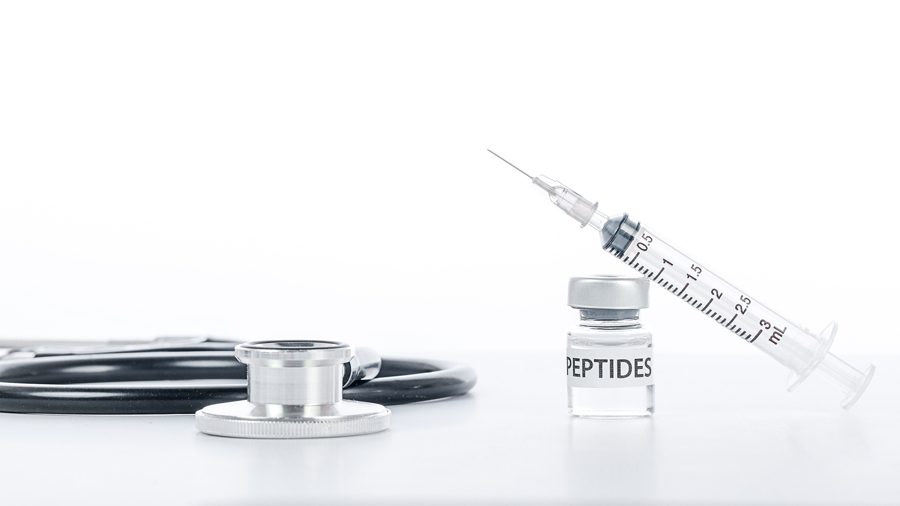
FDA-Approved vs. Compounded Peptides
One of the most important distinctions is whether a peptide medication is FDA-approved or compounded.
FDA-Approved Peptide Medications
FDA-approved peptide medications have been reviewed for a specific medical use. That process evaluates factors such as:
- Safety
- Effectiveness
- Dosing
- Manufacturing quality
- Drug interactions
- Known side effects
FDA approval of a drug does not mean that it is free from risks, but it means that there is scientific evidence backing its use.
Compounded Peptides
Compounding can be useful when an available commercial medication cannot meet a patient’s needs.
However, compounded drugs are not FDA-approved and are not individually reviewed before use for safety, effectiveness, or quality.
That makes the source especially important. A peptide prescribed through medical care and prepared by a licensed pharmacy is very different from a product purchased from an unknown online seller.
What Are the Potential Benefits of Peptide Therapy?
Potential benefits depend entirely on the peptide being used.
Depending on the medication and its clinical indication, peptide therapy may be used or studied in areas involving:
- Metabolic health
- Hormonal signaling
- Weight management
- Tissue repair and recovery
- Body composition
- Sexual health
- Gastrointestinal health
- Bone health
Many peptide drugs are designed to interact with specific biological targets, which can make them useful for certain medical conditions.
However, an interesting biological mechanism does not automatically mean a peptide has proven clinical benefits. Some therapies have strong human evidence, while others are supported mainly by early-stage research.

What Are the Risks of Peptide Therapy?
The risks vary depending on the peptide, dose, treatment duration, and individual patient.
Possible side effects can include:
- Nausea or digestive symptoms
- Headache
- Fatigue
- Changes in appetite
- Fluid retention
- Changes in blood sugar
- Hormonal effects
- Injection-site reactions
- Allergic or immune reactions
Some peptides may also have limited long-term safety data.
Product quality matters as well. Poor compounding practices can create problems involving contamination, incorrect strength, or inadequate purity.
Products purchased from unverified online sources carry even more uncertainty because the contents, dose, sterility, and storage conditions may not match what is claimed.
Are Compounded Peptides Safe?
Compounded peptides require a more individualized discussion.
They can have a medical role in selected patients, but their safety depends on several factors:
- Why the medication is being used
- The evidence behind the peptide
- Whether an approved alternative exists
- The pharmacy producing it
- Dosing accuracy
- Physician oversight
- Appropriate clinical and laboratory monitoring
At Impact Health NY, these considerations are reviewed before peptide therapy is recommended.
What About Peptides Sold Online?
Peptides sold outside an established medical and pharmacy system deserve particular caution.
Some products are labeled “for research use only” while being marketed for human use. In those situations, it may be difficult to verify:
- Purity
- Sterility
- Dose
- Storage conditions
- Manufacturing quality
- Whether the product actually contains the stated compound
Easy access does not make an online product equivalent to medication obtained through appropriate medical care.
Who Should Be More Cautious?
The answer depends on the specific peptide, but additional caution may be appropriate for patients with:
- Pregnancy or breastfeeding
- Active cancer or a history of certain cancers
- Significant kidney or liver disease
- Cardiovascular disease
- Diabetes or unstable blood sugar
- Hormone-sensitive conditions
- Autoimmune conditions
- Multiple medications
- A history of serious drug reactions
These factors do not automatically rule out every peptide-based treatment. They make individualized medical review more important.
Why Laboratory Testing Matters
Peptide therapy should not be based only on symptoms or wellness goals.
Depending on the treatment, laboratory testing may help determine whether therapy makes sense and establish a baseline for follow-up.
Testing may include:
- Hormone levels
- Blood sugar and metabolic markers
- Kidney function
- Liver function
- Lipid levels
- Other testing based on the patient’s health history and treatment
Follow-up can help show whether the treatment is producing the intended effect and whether any concerns are developing.
How Can Peptide Therapy Be Used More Safely?
No medical treatment is completely risk-free, but several steps can reduce unnecessary risk.
A thoughtful approach includes:
- A clear reason for treatment
- Review of the evidence for the specific peptide
- Appropriate patient selection
- Medication from a legitimate source
- Individualized dosing
- Review of medications and health conditions
- Baseline testing when appropriate
- Ongoing follow-up
- Adjustment or discontinuation if concerns develop
The important distinction is between medically supervised treatment and taking a peptide simply because it is popular online.
Are “Natural” Peptides Safer?
Not necessarily.
Some peptides mimic substances naturally produced by the body, but that does not automatically make them harmless.
Changing the dose, concentration, timing, or duration of a biological signal can still create unwanted effects.
“Natural” does not mean risk-free.
Do Peptides Have Fewer Side Effects Than Traditional Medications?
Sometimes, but this cannot be assumed.
Some peptide medications are designed to act on specific biological targets, which may reduce certain off-target effects.
However, a targeted treatment can still cause significant side effects if the pathway it affects plays a role in multiple systems.
Dose, treatment duration, product quality, and individual health all influence risk.
The Importance of Physician Oversight
Peptide therapy can involve complex decisions about evidence, dosing, product quality, benefits, and monitoring.
At Impact Health NY, peptide therapy is approached as part of personalized medical care rather than a stand-alone wellness product. Your medical history, symptoms, laboratory results, medications, risk factors, and goals are reviewed before treatment is considered.
Dr. Marcus and the clinical team can also determine what follow-up is appropriate and whether treatment should be adjusted or discontinued based on your response.
Peptide Therapy at Impact Health NY
The better question is not simply, “Are peptides safe?”
Instead, the question is whether or not the particular peptide is the right one for a particular patient based on the amount of research and information gathered from a reputable source.
At Impact Health NY, peptide therapy is considered within a broader approach to long-term health and longevity. We review the potential benefits, limitations, medical history, laboratory findings, and individual risk factors before recommending treatment.
Schedule a consultation with Impact Health NY today to discuss whether peptide therapy may have a role in your health plan.
Peptide Safety FAQs
Are peptides FDA-approved?
Some peptide medications are FDA-approved for specific medical conditions, while many peptides marketed for wellness, recovery, anti-aging, or performance are not. Compounded medications are also not FDA-approved.
Are compounded peptides safe?
They can have a medical role in selected patients, but the evidence behind the peptide, pharmacy quality, dosing, and medical supervision all matter.
What are common peptide side effects?
Side effects depend on the treatment but can include digestive symptoms, headache, fatigue, injection-site reactions, changes in appetite, blood sugar changes, or hormonal effects.
Can peptides cause long-term problems?
Some peptide medications have extensive safety data, while others do not. For newer or less-studied peptides, long-term effects may not yet be well understood.
Are peptides bought online safe?
Products sold outside established medical and pharmacy systems carry additional risks because their identity, purity, sterility, concentration, and storage may be uncertain.
Do peptides need to be monitored with bloodwork?
Some do. Monitoring depends on the peptide, the reason for treatment, your health history, and the biological systems involved.
Who should avoid peptide therapy?
There is no common list since each type of peptide is associated with specific side effects. There are different factors like pregnancy, various types of cancer, kidney and liver problems, heart diseases, hormonal issues, and medications that can determine the suitability of treatment.